
In the book “Mean” by Myriam Gurba, one recurring motif is the use of humor as a coping mechanism in the face of trauma and oppression. Gurba uses dark humor throughout the book to address difficult topics like sexual violence and racism often using irony and sarcasm to comment on the absurdity of the situations she finds herself in. It states, “Of Course an elderly white dude taught anthropology. Who better to explain all the cultures and peoples of the world than he who is in charge of them?”.(p.90). By analyzing this motif, we can see how humor can be a powerful tool for marginalized individuals to resist and subvert oppressive systems. Gurba’s humor not only allows her to cope with trauma, but also serves as a way to call out the injustices and hypocrisies of the world around her. In this way, humor becomes a form of resistance, a way for Gurba to reclaim her power in the face of adversity.Furthermore, this motif can also prompt readers to consider the ways in which they use humor to cope with their own struggles and hardships, and whether their use of humor is reinforcing or challenging systems of oppression. Overall, by analyzing this specific motif within “Mean,” we can gain a new perspective on the power of humor as a tool for resistance and self-empowerment. Sexual violence is not just a personal trauma, but a systemic issue perpetuated by societal attitudes towards women and people of color, and that humor can be a powerful tool for coping with trauma and resisting oppression, challenging societal norms and expectations that would have survivors remain silent and ashamed about their experiences.
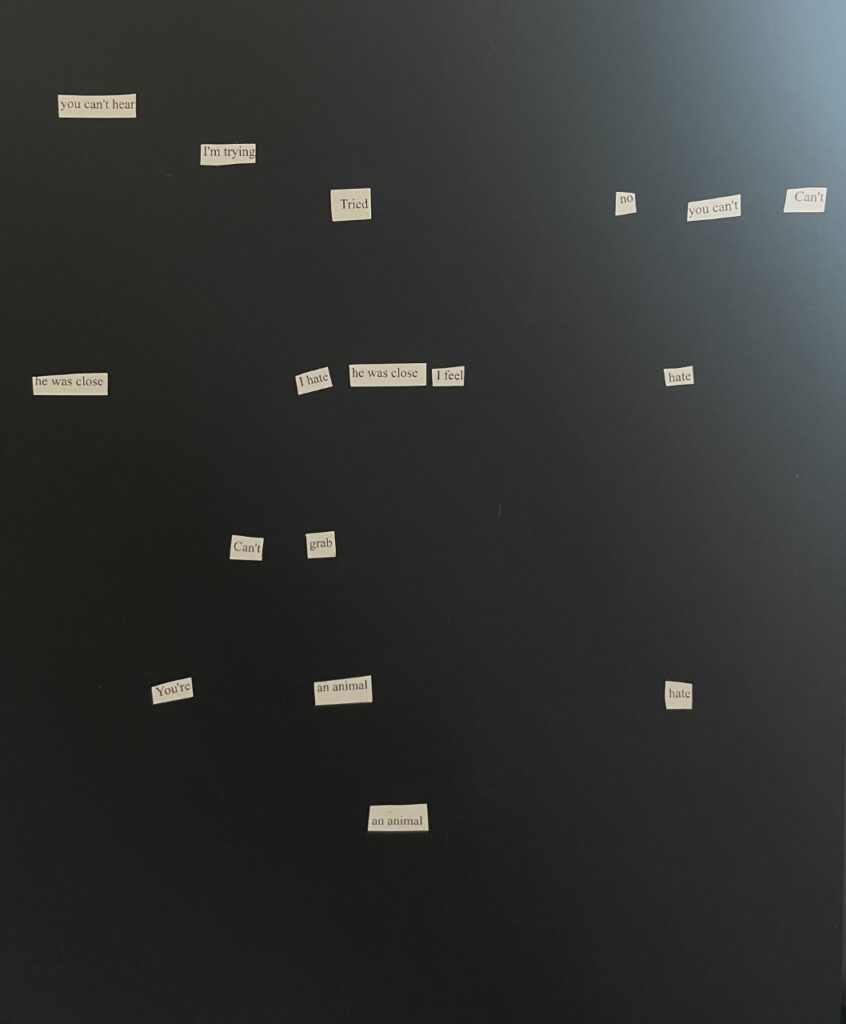
Overall, Gurba’s writing is characterized by a bold, provocative style that combines humor, imagery, and social critique to explore themes of trauma, identity, and power.Gurba’s use of vivid imagery and sensory details to create powerful, evocative descriptions of people, places, and experiences. Her writing is often visceral and raw, immersing readers in the physical and emotional realities of her own life and those around her. In the text she states, “The hand Macaulay wasn’t molesting me with rose to his snout.”.(p.25). I think that this quote helps us to truly understand the raw realness of her writing and how vulnerable and intense it is. This rawness and dark humour she uses to express her trauma gets through to us on a deep level and helps us to understand the true severity of sexual assault. In addition to these stylistic elements, Gurba’s writing is characterized by a strong social critique, which she uses to expose the contradictions and injustices of society. She is particularly interested in issues of power and oppression, and she uses her personal experiences as a mixed-race Chicana and queer woman to comment on larger social structures and systems.This makes Gurba’s writing is a bold and unapologetic exploration of the intersections of trauma, identity, and power. Through her use of humor, imagery, and social critique, she invites readers to engage with these themes in a deeply personal and often challenging way, challenging us to rethink our assumptions and to confront the injustices of the world around us. One of the ways Gurba uses her bold writing style is by being unapologetically honest and straightforward in her descriptions of traumatic experiences. She does not shy away from using explicit language or graphic descriptions, and often includes details that might make some readers uncomfortable. However, this approach allows Gurba to paint a vivid and realistic picture of the pain and trauma she has experienced, while also drawing attention to the ways in which these experiences are often silenced or ignored.
Another way Gurba uses her bold writing style is by employing irony and humor to highlight the absurdity of societal norms and expectations. Through her writing, she often challenges readers to re-examine their own assumptions and biases, while also shining a light on the ways in which these norms can be harmful and oppressive.Overall, Gurba uses her bold writing style to create a unique and powerful reading experience that is both deeply personal and politically engaged. Through her use of humor, vivid imagery, and unflinching honesty, she encourages readers to confront uncomfortable truths about themselves and the world around them, while also offering a message of hope and resilience in the face of trauma and oppression. I was often very surprised by the intense and explicit language that Gurba used throughout the book but I also admire her brutal honesty and rawness because it shows the seriousness of the situations and helps us to understand that she isn’t going to sugarcoat anything about these traumatic events because the more real it is the more we are able to realize how important and traumatic this was.
One significant pattern that develops throughout “Mean” by Myriam Gurba is the theme of the erasure of queer and non-white perspectives in dominant narratives and histories. Gurba uses her own experiences as a queer Chicana to illustrate the ways in which dominant narratives and histories exclude or minimize the experiences and perspectives of marginalized groups. This theme is first introduced in Gurba’s discussion of the murder of Sophia Torres, a Chicana teenager who was killed and raped. Gurba notes that the media coverage of Torres’ murder focused on the perpetrator rather than the victim, erasing Torres’ identity and her experiences as a Chicana. Throughout the text, Gurba continues to critique the erasure of marginalized perspectives in dominant narratives, from the erasure of queer identities in the history of the Catholic Church to the erasure of Chicana perspectives in the portrayal of the Mexican American War. Gurba’s use of humor and intertextuality allows her to challenge these dominant narratives and reclaim space for marginalized perspectives. This pattern is significant because it highlights the importance of centering marginalized perspectives in our understanding of history and society. By critiquing the erasure of queer and non-white perspectives in dominant narratives, Gurba challenges us to interrogate our own biases and work towards a more inclusive and equitable society.
Discussion Questions
1.How does Gurba’s identity as a queer, mixed-race Chicana inform her experiences of racism and homophobia within her community? How do these experiences shape her understanding of her own identity and sense of belonging?
2.How does Gurba’s experience of sexual assault shape her relationship to her community and her sense of justice? How can we work to create a culture that supports survivors and holds perpetrators accountable, even within communities that are already marginalized?
Citation
Gurba, Myriam. Mean. Coffee House Press, 2017
 Skip to content