
Extra Credit 2 & 3

2. Watch the video from Myriam Gurba’s event at SUNY Cortland (2021) and write an event review (instructions below)  

I was very excited to watch the video from Myriam Gurbas’ event at SUNY Cortland (2021), and I can happily say I was not disappointed by the end. After watching Myriam Gurbas’ event with SUNY Cortland, I wanted more. It is human nature to be nosy and through Grubas’ work allowing herself to become so vulnerable to the reader it becomes beyond inviting and intriguing to most humans to want to know more. In her video, she continues to share such raw and vulnerable moments with mere strangers. Projecting that vulnerability is a powerful source. Gurba becoming so vulnerable and open with her life allows her to take control and through this, there appears to be a great power, while also offering a new perspective for sexual assault victims and survivors. 

After hearing Gurba read from the memoir Mean short chapter Googleplex, and her work in progress, it brought new light to the chapter Googleplex. For example, seen within the chapters of Mean is the strategic word used to ensure that she is able to reach a wide variety of readers. Another way in which hearing Gurba read from her work changed my perspective of her was by learning that she didn’t disclose everything to us. Through the Interpersonal essay, she is introduced to the attendants of SUNY Cortland; she shares an essay, not yet published and is open to hearing suggestions from the audience. As I thought this was extremely cool, by the end I found myself being partially annoyed at first, as I would have enjoyed reading about her and her cousin in her memoir Mean. But then I remembered, it is up to Gurba to decide what pieces of her life she chooses to share and what aspects she does not want to disclose, and as humans, we have to respect that or we are no better than her perpetrators if we expect more than that. Another thing that surprised me which Gurba shared in her video was that while writing Mean, she was in a domestic abusive relationship. This changed my perspective of not only the work that filled the pages of Mean but Gurba herself. How could someone who appeared to be so powerful and for lack of a better word badass, endure a domestic abusive relationship? It made me think, why do bad things happen to good people? A question introduced early on in her work of Mean. Gurbas’s father’s response to this question posed by young Gurba was to keep life interesting, in other words, life would be boring if nothing bad ever happened. Gurba does a perfect job executing and illustrating this throughout her literary work and her event at SUNY Cortland (2021). By utilizing what some may find as a weakness, she made it into fuel. Rationalizing the hardships Gurba has faced makes me think that all these bad things have happened to her so she can write and inspire change to all fingertips that get to touch Mean. 

3. Blog post about Episode 1 “Democracy” of the 1619 Project (Hulu). 

After watching Episode 1 “Democracy” of the 1619 Project (Hulu), I was taken aback. It was astonishing and saddening that a few of the things discussed in the video I was learning about for the first time. It made me question my education, and feel disappointed within our educational system. It made me wonder two things. One, how did I get this far without learning about the 1619 project? And two, how many other people in our country still don’t know about it, how many more will go uneducated? The history of our country is significant to the future and success of our country. Why has it been continually shown throughout our history that typically white males have a problem with sharing power, and because of that they have created a system that is rooted to oppress minorities. Throughout the entirety of the 1619 Project on Hulu, they brought light to subjects that have been forgotten in the teaching of our history, and through that how the foundation of our country was created. Such as, that black Americans were not only foundational to American freedom but built our country. They built the White House, and railroads, aided in Wall Street, forced laborers, and are the foundation of America, even though they are continually treated so poorly. What was most surprising/interesting to me was that in October 2022, 33 state-level efforts and a federal bill sought to restrict educators from teaching about the 1619 project or discussing systemic racism within the classroom. What did not surprise me was that it was banned in Texas and Florida backlash to project the fight to include slavery and black contributions in the full story of America. What was most important to me was the overall message of this video, the fight to include black Americans and democracy itself. It is important to have outlets like this out there so Americans like myself can become educated and help create a better America for everyone.

Episode 1 “Democracy” of the 1619 Project (Hulu), reminded me of the play we read for a class titled, “A Raisin in the Sun” by Lorraine Hansberry. The idea of the American dream mentioned within this piece reminds me of the Youngers who so desperately tried to achieve something that was never in reach for them. For example, Walter goes practically mad through his efforts of achieving the American Dream. The episode lists ways the American Dream was out of reach for black Americans, reminding me of the Youngers. Throughout the entirety of our class and by the end of the episode, there were many ways in which I saw this video, relating and reflecting a lot of the course-related work done within our class such as literary works titled Citizen and Mean covered in your class.  
Left First

*PSA my poem got messed up in my folder, so I wrote it out here as well. 

Left First-

I did not

speak out

I did not

speak out

I did not 

speakout 

I did not 

speak out 

           because 

I was not 

I was not

I was not

 I was not a

      then they came 

they came, they came, they came 

and there was no one left 

            SPEAKOUT. 

I took the poem “First They Came”, by Pastor Martin Niemöller, to be my found poem. The poem “First They Came” stood out to me for several reasons when posed with the prompt of finding a piece that made me feel something. What is most upsetting about this poem is the relevance it still holds today. Even coming from a post-war world regarding World War Two, addressing Holocaust, this poem still holds great signifigance. Throughout history, this enduring issue of people not standing up for others can be seen in numerous lights. This poem simultaneously represents all of the voices of society. The voices that have a voice and the ones that don’t. This poem encourages me to be a better person, a person I wish someone else would be not only to me but for me. 

The method by which I chose to create this found poem was by selecting words and phrases, cutting out, and rearranging them. When rearranging this poem I was thinking about a new way to interpret the words and overall conveyed messages from Niemöller’s work. I wanted to emphasize not only the word “speak out”, but the action of speaking out, and the impact it holds on society. When referring to “I” in my found poem, I am directly addressing the reader. I want them to feel like they too are the victim, a bystander, and a voice worthy of great change. I decided what to cut out and rearrange by taking the words that held the most weight to me. By taking out certain words, I can illustrate the relevance of this piece that continues to endure. Overall, this experience helped me think differently about language and literature in regards not only to “ZONG!”, but the English language. English theory is one of the most fascinating aspects of the English language to me, and I believe that Found poem is a prime example of how intricate English truly is.

*Original poem*

“First They Came”, by Pastor Martin Niemöller

First they came for the Communists

And I did not speak out

Because I was not a Communist

Then they came for the Socialists

And I did not speak out

Because I was not a Socialist

Then they came for the trade unionists

And I did not speak out

Because I was not a trade unionist

Then they came for the Jews

And I did not speak out

Because I was not a Jew

Then they came for me

And there was no one left

To speak out for me

  Act 1 of  A Raisin In The Sun

“A Raisin in the Sun” is a play by a black woman, Lorraine Hansberry that debuted on Broadway in 1959, and showed us oppression and the ramifications of oppression. At the same time, it also showed us, the audience, how one can defy those expectations, limits, and barriers. This play broke stereotypes in that time period, not only on the stage through the story and its characters, but as well in real life as the playwright broke barriers too. The breaking of stereotypes in the story is shown so far by one character named Beneatha. Beneatha is a 20 year old female who is going to school to be a doctor.  Six years after the time period that the play is set around and debuted in, only 8% of women were medical students, and out of that percentage only 10% were represented in med school classes during 1965. Out of the 8%, only 6.7% graduated and went into positions in the medical field (Women physician pioneers of the 1960s: Their lives and profession over a half century & nbsp;: Archives Talk). It is very hard to find statistics on African American women in the medical field during the 1950s/60s.  But, “In 1900, when 11.6% of the nation’s population was Black, 1.3% of physicians were Black. In 1940, when 9.7% of the total population was Black, 2.8% of physicians were Black — 2.7% were Black men and 0.1% were Black women. By 2018, when 12.8% of the total population was Black, 5.4% of U.S. physicians were Black — 2.6% Black men and 2.8% Black women.” (Rivero, Proportion of black physicians in the U.S. has changed little in 120 years, UCLA research finds, April 9th,  2021). When looking at this context and Hansberry’s character, Beneatha we, the audience, can see how her acts were so radical and a first for many in her time. There have been a lot of (but not enough) laws and acts since then to help create a society where everyone is treated not only more equally, but also fairly. Women still to this day make 83 cents for every dollar a man makes, even though our education costs the same (Sonam Sheth These 8 charts show the glaring gap between men’s and women’s salaries in the US).

 “Forgive me for ever wanting to be anything at all!” Beneatha says on page 37 when having a heated conversation with her older brother, Walter over money. To me this quote represents feeling bad for taking the same opportunity as someone else,  even though you deserve the same right to take it. As I don’t believe she feels that way, Beneatha is pointing out that society along with her family, more specifically her brother, does not think she should have dreams like wanting to be a doctor. So, when or if you do take the opportunity,  you feel as if you are imposing; doing something you shouldn’t be doing.  As a female, I feel this quote represents how a lot of minority groups feel when they break societal stereotypes, barriers, and expectations. Society’s standards and norms hold an enormous amount of power, and if you benefit from them you might not even be aware of them, as opposed to those who are treated differently and are therefore well aware of the disparity. Bennie and Walter are compared to Mama’s plant which is a reflection and a metaphor of how society treats those who are “presumed” to be different. “Like this little old plant that ain’t never had enough sunshine or nothing.”  (Hansberry, A Raisin In The Sun, 52). These disparities go against the famous “American Dream,” which also happens to be one of the major themes in this play;  that as long as you work hard you can accomplish anything, but in reality when you take an opportunity that was not made for you you are judged. “Seems like God didn’t see fit to give the black man nothing but dreams—but He did give us children to make them dreams seem worthwhile.” (Hansberry, A Raisin In The Sun, 45). In reality, where we start does matter. We do not get the same chances, opportunities, and expectations; some people get a head start by having the benefit of the doubt through privilege. This view is represented by the character, Walter when in conversation about his son and life to wife, Ruth.“I’m thirty-five years old; I have been married eleven years and I got a boy who sleeps in the living room—(Very, very quietly)—and all I got to give him is stories about how rich white people live …” (Hansberry, A Raisin In The Sun, 33). What Beneatha’s character represents to many is not only hope, but a chance to change societal stereotypes and barriers. The play and her character were created during a time in our history when it was so radical to be a black woman to write and successfully get a play on Broadway.

In conclusion, I do believe that huge disparities remain and that people’s dreams and career paths are heavily affected by racism and gender norms and stereotypes, which influence families’ beliefs, values, and judgments. Some families’ cruel and strict religious and marriage beliefs are still unfortunately a prevalent issue in today’s society, like conversion therapy and arranged marriage. Whether we choose to see these disparities or not, does not make them go away. What I do believe is that the representation of the character Beneatha on the surface appears to be relatable, when in reality she is not due to her time period and that most of us can’t begin to imagine the courage, power, and grace she holds. Through the  representation of her character and her aspirations, she is taking one step for herself and another step for a future and society that is built to support and benefit all genders, races,  socioeconomic classes equally, and breaks the boxes stereotypes put us in. 

  1. Citations:
  • “Women Physician Pioneers of the 1960s: Their Lives and Profession over a Half Century  : Archives Talk.” LibCal, 16 Mar. 2022, 
  • Sonam Sheth, Madison Hoff. “These 8 Charts Show the Glaring Gap between Men’s and Women’s Salaries in the US.” Business Insider, Business Insider, https://www.businessinsider.com/gender-wage-pay-gap-charts-2017-3.
  • Hansberry, Lorraine. A Raisin in the Sun. Vintage Books, 1958
  • Rivero, Enrique. “Proportion of Black Physicians in U.S. Has Changed Little in 120 Years, UCLA Research Finds.” UCLA, UCLA, 20 Apr. 2021, https://newsroom.ucla.edu/releases/proportion-black-physicians-little-change.
  1. Discussion questions:

-How do discrimination, oppression, and stereotypes affect one’s dreams and aspirations? View the question through the character Beneatha and the norms broken by her in the play.

-How do these quotes represent the points made in this play so far? Are these quotes metaphorical, and if so what do they represent? Do the quotes below seem to maybe foreshadow future events, and if so what?

“MAMA: ….If this little old plant doesn’t get more sun than it’s been getting it ain’t never going to see spring again. (39)”

“MAMA: Bennie and Walter. Like this little old plant that ain’t never had enough sunshine or nothing—and look at it … (52)”

My name is Grace Mezzatesta 

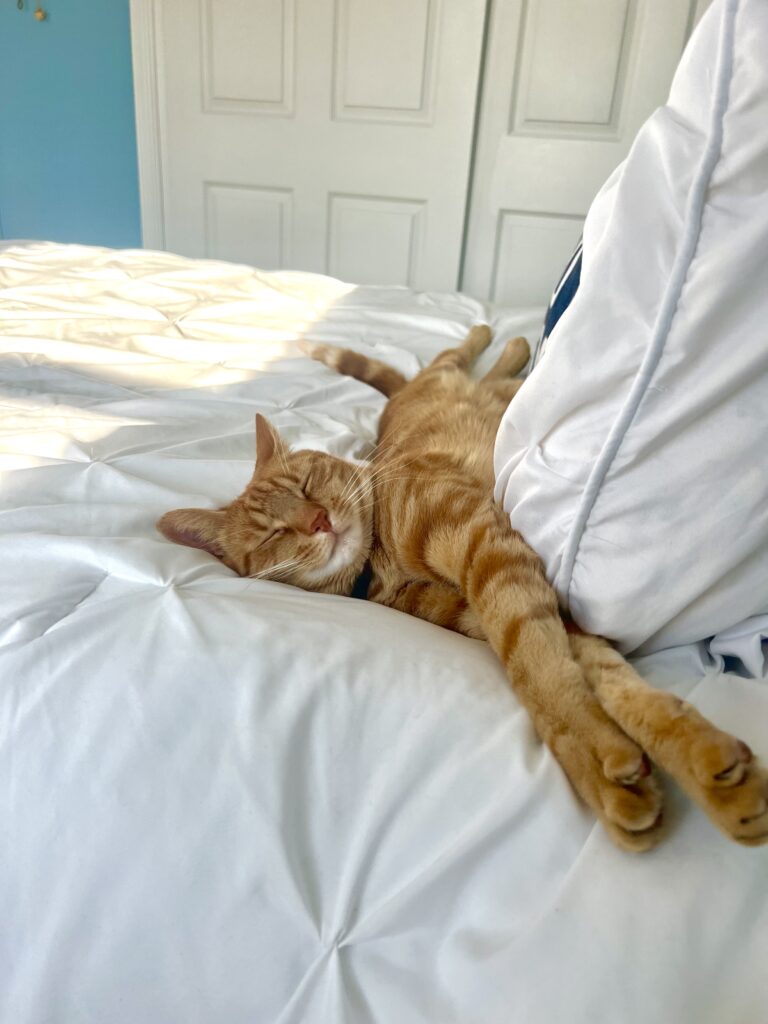
Hi! My name is Grace Mezzatesta and I am from Long Island, NY.  I have a cat named Reese and he is the best. I will attach a photo of him below so you can see how adorable he is! My favorite number is 7 and my favorite color is blue. I am a sophomore with a major in inclusive childhood education. I went to SUNY New Paltz for a year before I transferred here. I have a twin sister who also transferred here too, her name is Annie. I became pescatarian over the summer and I love it. When I am at school it can be hard so once in a blue moon I’ll have some type of meat or chicken. I refer to it as being a flexitarian. I like to ski and I am so excited to go to the local mountain this spring semester and do a few runs! I brought up a pair of ice skates too, so if anyone knows any good spots to go ice skating when the lakes freeze, please feel free to share 🙂

css.php Skip to content